Wednesday, April 12, 2006

Harry Plimpton on the spot


There were huge seas on the Derwent River in Hobart over the weekend. Having memories of my local beach losing all its sand in similar conditions when I was at infant school, I was quite interested in finding some pictures of what had gone down on Saturday. I very quickly became quite frustrated by the lack of pix on various news sites, and eventually gave up. Was speaking to my parents on Monday morning, and mentioned the storms. Dad replied "yeah, we were down there. I've got some photos, and had one published in the Sunday paper." I should have known in the first place.

Click here for a full size version. You'll see some more photos from Sandy Bay here.

Thanks to Becher & Raelene @ Beyond PR for the page scans.

Monday, April 10, 2006

Bliar's recent visit to Australia

In a novel light

April 1, 2006

Dugald Jellie takes a literary tour of Hobart.

www.smh.com.au

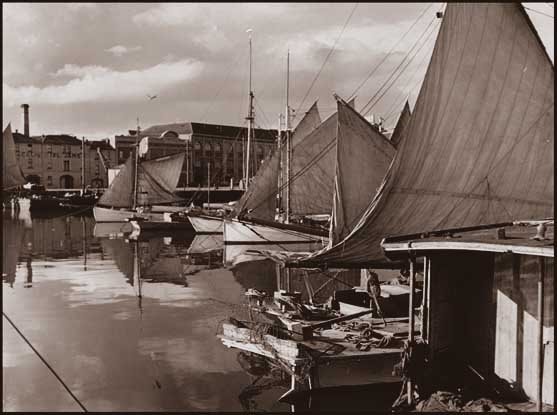
'PARDON the stench." It's Tom Gilling's introduction to a Hobart Town of 1812 - a clipped first sentence to a magical first novel, The Sooterkin, with rancid whale blubber, oil and piles of guts spilled on flooded, dark-muddied, stinking streets. "Last week a squid was found swimming in the harbourmaster's basement."

Enough to make you squeal. So richly Dickensian, so ripe, this picture of the former whaling port, our second-oldest city, written up with such vital pungency it ensures I pack a handkerchief. Who knows what colonial odours linger, what's encountered when stepping back into the fiction of Van Diemen's Land.

For two days in Hobart - a place Thomas Wood in Cobbers (1934) says "has the air of an English country town which has shed its old houses and wandered down to the sea for a rest" - I wish to discover this southernmost capital through the eyes of its writers. I want to be lost in the true travel of literature. Visit what others have observed, from Bryce Courtenay, to Patrick White's A Fringe of Leaves, as a journey through books and streets.

Beginning in a jam factory. "The jam factory on the Hobart wharves," in Richard Flanagan's Death of a River Guide, where the protagonists' mother sticks labels on pineapple and melon jam tins. They say the aroma was so strong locals knew when apricots or plums were being boiled up.

Henry Jones & Co was the firm, the famed IXL brand-name derived from Henry's quip: "I excel at the products I make". A household label in the British Empire during World War I, it was processed in the 1820s Georgian sandstone warehouses on the Old Wharf, wherefrom the city's earliest immigrants arrived, tea was imported from China, spices from India, nails from England, and jams, jellies and canned fruit dispatched to the world.

Melbourne businessman John Elliott in 1972 gutted the headquarters, the factory dormant until redeveloped recently into Hobart's newest cultural precinct. It's easy spending an entire morning here drinking coffee, reading newspapers, eating, looking at huon, sassafras and myrtle furnishings, buying art and admiring old jam labels.

Near Victoria Dock is the Tasmanian Museum and Art Gallery, with an important John Glover collection and an affecting installation on the Tasmania tiger - the subject of Julia Leigh's taut debut novel, The Hunter.

A TV monitor within a chicken-wire cage screens the only known moving footage of the thylacine, the last known of which died in Hobart Zoo on September 7, 1936. Grainy film shows a distressed animal in a woefully small run. It's saddening how poorly the welfare of this species was regarded. Our largest native predatory marsupial, driven to extinction and now reduced to the State's coat-of-arms, used on official government merchandising, or to sell beer.

Patrick White's fictional characters Austin and Ellen Roxburgh arrived in Hobart Town in 1835 to find "a shrouded mountain looming over all". The town was "buffeted by wind, between the mountain which presided over man's presumptuous attempt at a town, and the shirred waters of the grey river rushing toward its fate, the sea".

Soft rain falls as I leave the gallery. A scrim of mist blurs Mount Wellington. Already I see its moods, its mouldy weather. I seek refuge in bookshops.

Fullers in Collins Street has the city's richest history. Novelist Christopher Koch had his first job here, writing it into his 1985 work The Doubleman as "Varley's", where "the basement was a gloomy place, yet I rather liked it; I welcomed excuses to escape down here from serving the customers: Darcy and I lurked here like trolls, and furtively read the books".

It's a fine bookshop, with the upstairs Afterword Cafe serving delicious snacks. But Astrolabe Booksellers at Salamanca Place is suited better to my escape, with rare volumes such as the cumbrously-titled A Geographical, Historical and Topographical Description of Van Diemen's Land - with important hints to immigrants and useful information respecting the application for grants of land (1822). The island's earliest travel guide, perhaps.

Proprietor Michael Sprod points me to the 1846 Shipwright's Arms Hotel in nearby Battery Point, for which I am grateful. It's dinnertime and the bangers'n'mash are just the ticket, washed down with a Cascade (they've five on tap: lager, light, pale ale, draught and stout). A rainbow spans the Derwent in saffron light. Oh, my goodness, Hobart is beautiful.

Next morning I'm on the first bus to Fern Tree and stride up Mount Wellington in double-time. A thick pea-soup fog - or maybe leek and potato - pulls in as I approach the flat-topped summit.

My view from the top is reliant entirely on memory of Glover's 1831 oil-on-canvas landscape, The Derwent River and Hobart Town.

There's no time to call at the Female Factory near the Cascade Brewery in South Hobart, written into Courtenay's best-selling The Potato Factory. The Mercury Print Museum in Macquarie Street awaits, chronicling a paper first published in 1854, described later by novelist Roy Bridges (once a cub reporter) as a "rotten sweatrag".

I return afterward to the deep-water wharf on the "neat flat river", as poet Vivian Smith wrote, for a seafood lunch at Mures, a local favourite. Seagulls quarrel outside among trawlers and spiralled tea-tree craypots. Blue eye and farmed Atlantic salmon are on the menu. I order pink ling.

Much of the afternoon is spent following Richard Flanagan's Gould's Book of Fish, inspired by William Gould's circa 1832 convict Sketchbook of Fishes in Macquarie Harbour, housed at the Allport Library. The book is in Canberra when I visit, loaned to a touring exhibition and at other times mostly put away. But four Gould watercolours of plants, all bought at Sotheby's recently, are hung in a botanical art exhibition until April 21.

Time's running out. The Theatre Royal is a must-see, opened in 1837 among tanneries, abattoirs, a soap factory; Australia's oldest, where Sir Laurence Olivier in 1948 acted in The School for Scandal and later reminisced: "The audiences were warm and wonderful and the ovations staggering." The building was thankfully saved from demolition in the early 1950s by, among others, Hal Porter. It remains a 750-seat monument to high Victorian make-believe.

From Campbell Street's dip it's a long walk up to North Hobart. Thank goodness for the Republic Bar. At first I miss it, walk straight passed, doubling-back in hot mid-afternoon sun. Inside is a haven; funky, smoke-free, and with seven beers on tap. A sign says it was licensed in 1831 as the Rose, rebuilt in 1921 as the Empire, and known from 1997 as the Republic, which everyone seems happy about.

The barman shouts me a beer and tells a story. He says he's in Flanagan's Gould's Book of Fish as a character, that the author lives nearby and drinks here often. Certainly the pub's in the novel, where Sid Hammer loses his mystical book after leaving it on the bar.

Now it's last drinks and in honeydew light I neck a pint of Boag's lying on lush grass in Salamanca Square. It's Friday night and I think if I found a woman who'd join me I'd move here in a flash. Catch the first boat down.

Soon after I meet a river guide who once took me down the Franklin and join him in a courtyard where musicians play to a full house. It's a carnival, everybody unwinding at week's end. In the crowd I'm introduced to a man I'd tried to interview before my arrival and whose writings for two days I have followed. Richard Flanagan. He is pleased to meet up. I show him a painting I had bought from a student artist. We talk of his brother. He wants to take me to an authentic Hobart pub, get me on the turps. It's too bad I've a bus to catch to the airport.

Wednesday, April 05, 2006

The chilli so hot you need gloves

The Times, April 1 2006

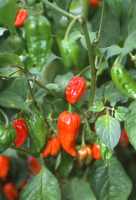
THE world’s hottest chilli pepper does not come from a tropical hot spot where the locals are impervious to its fiery heat but a smallholding in deepest Dorset.

Some chillis are fierce enough to make your eyes water. Anyone foolhardy enough to eat a whole Dorset Naga would almost certainly require hospital treatment.

The pepper, almost twice as hot as the previous record- holder, was grown by Joy and Michael Michaud in a poly- tunnel at their market garden. The couple run a business called Peppers by Post and spent four years developing the Dorset Naga.

They knew the 2cm-long specimens were hot because they had to wear gloves and remove the seeds outdoors when preparing them for drying, but had no idea they had grown a record-breaker.

Some customers complained the peppers were so fiery that even half a small one would make a curry too hot to eat. Others loved them and the Michauds sold a quarter of a million Dorset Nagas last year. At the end of last season Mrs Michaud sent a sample to a laboratory in America out of curiosity. The owner had never tested anything like it.

According to Mrs Michaud, the hottest habaƱero peppers popular in chilli-eating competitions in the US generally measure about 100,000 units on the standard Scoville scale, named after its inventor, Wilbur Scoville, who developed it in 1912. At first the scale was a subjective taste test but it later developed into the measure of capsaicinoids present. The hottest chilli pepper in The Guinness Book of Records is a Red Savina habaƱero with a rating of 570,000 Scoville Heat Units (SHU).

Mrs Michaud was stunned when the Dorset Naga gave a reading of nearly 900,000SHU. A fresh sample was sent to a lab in New York used by the American Spice Trade Association and recorded a mouth-numbing 923,000SHUs.

Mrs Michaud said: “The man in the first lab was so excited — he’d never had one even half as hot as that. The second lab took a long time because they were checking it carefully as it was so outrageously high.”

The Dorset Naga was grown from a plant that originated in Bangladesh. The Michauds bought their original plant in an oriental store in Bournemouth. Mrs Michaud said: “We weren’t even selecting the peppers for hotness but for shape and flavour. There is an element of machismo in peppers that we aren’t really interested in. When the results of the heat tests came back I was gobsmacked.”

The couple are now seeking Plant Variety Protection from the Department for Environment, Food and Rural Affairs, which will mean that no one else can sell the seeds.

Mrs Michaud, 48, has run the company with her husband at West Bexington, near Dorchester, for ten years. Mr Michaud, 56, has been a regular on the television chef Hugh Fearnley-Whittingstall’s River Cottage series, advising on vegetable growing.

Anyone wanting to try the Dorset Naga will have to be patient as chillis are harvested only from July on. In Bangladesh the chillies grow in temperatures of well over 100F (38C) but in Dorset they thrive in polytunnels.

Aktar Miha, from the Indus Bangladeshi restaurant in Bournemouth, said that even in its home country the naga chilli was treated with respect. “It is used in some cooking, mainly with fish curries, but most people don’t cook with it. They hold it by the stalk and just touch their food with it,” he said.

“It has a refreshing smell and a very good taste but you don’t want too much of it. It is a killer chilli and you have to be careful and wash your hands and the cutting board. If you don’t know what you are doing it could blow your head off.”

FROM HOT TO NOT

Scoville Heat Units

Pure capsaicin: 15m to 16m

US Police-grade pepper spray: 5m

Dorset Naga: 923,000

Red Savina habanero: 577,000

Scotch bonnet: 100,000-325,000

Jamaican hot pepper: 100,000-200,000

Cayenne pepper: 30,000-50,000

Jalapeno pepper: 2,500-8,000

Tabasco sauce: 2,500

Pimento: 100 to 500

Bell pepper: 0

Tuesday, April 04, 2006

Katie got a new bike


Hey all,

Katie's picked up her new bike, compliments of the Rumble/Askins closing down sale. As well, we took a trip out to the Kew Bridge Steam Museum. There's photos, and a couple of other assorted snaps on my new SMUGMUG photo page (if you wanna join, quote my email address!) right here.

Thursday, March 30, 2006

Glastonbury, the movie


As some of you may be aware, The Glastonbury Festival has been a bit of a centrepiece of the last four summers I've had in the UK. Sadly (but understandably), there's no activity in the Vale of Avalon this year (which begs the question, where will the Scrumpy bus guy get rid of his excess production)?

Micahel Eavis commissioned JulienTemple to produce a film about the festival in 2002, the first year of "superfence". Eavis was worried that the fence could destroy the unique atmosphere of Glastonbury, making it the last year. He was wrong, Glastonbury has survived, and the film is about to be released in Britain.

Here's a preview of the film from The Observer.

Wednesday, March 29, 2006

Knowledge or humanity


British Museum trustees' decision to return human remains to Tasmania was harder than we expected

Helena Kennedy
Tuesday March 28, 2006

Two bundles held by the British Museum, made of kangaroo skin and closed by a drawstring, are unremarkable, but contain human ash gathered from a cremation fire by Tasmanian Aboriginals in about 1830. They are extremely rare physical traces of a population nearly exterminated during European settlement in the 19th century. This genocide, in which the indigenous people were shot for sport by farmers, was one of the most shameful episodes in British colonial history. The last full-blood Tasmanian Aboriginal died in 1888, but the original population continues to exist in the form of Tasmanians of mixed Aboriginal and European descent. And it is their representative body, the Tasmanian Aboriginal Centre, that has asked for the return of their ancestors' ashes.

The law prohibits trustees from disposing of any part of the museum's collection - a sensible measure to protect against short-term financial or political pressures. But it has long been obvious that human remains are not like other objects held by museums. Descendants are distressed that the remains of ancestors have not reached their final resting place, in accordance with indigenous customs. And when, as in the case of the Tasmanian Aboriginals, those ancestors suffered such an egregious wrong, that distress is likely to be very intense.

Last year parliament passed a law recognising the unique status of human remains in museum collections, and enabling trustees to transfer ownership when appropriate. British Museum trustees welcomed this change; indeed, we helped draft a code of practice to accompany the law. Now the trustees could return human remains where the burial process had been interrupted, which includes the ashes in the bundles. But should they? That question proved more complicated than we expected.

The bundles were filled with the cremated ashes of a family member, then carried close to the body as amulets to protect against illness or alleviate physical pain. There is no way of knowing what would ultimately have happened to these two bundles had they not been collected by an outsider as records of structures of belief and religious practice among the native Tasmanians; it seems likely that they would have been laid to rest in a particular place in the landscape, perhaps in a tree or somewhere in the bush.

But - and it is a big but - these are now the only two such bundles known anywhere in the world. That means they are the only surviving physical evidence of a whole system of belief and a social order that has since disappeared: precisely the kind of object the British Museum was established to keep and preserve. In our present state of knowledge the ashes can reveal no further useful information about the health or physical history of the people when alive; but who knows what knowledge might one day be derived from them? As trustees, we had to consider if we could responsibly allow the loss of what might be the last possible information about Tasmanian Aboriginals.

The debate was difficult. How do you weigh a possible advance in human understanding against the desire of a community of people to see the return of the ashes of recent forebears so they can be disposed of with appropriate ritual? Which course of action will lead to greatest public benefit? Might a later generation of Aboriginal descendants deplore the loss of the already slender material evidence of Tasmanian customs? How will that loss look in a hundred years?

The trustees consulted three outside experts and the museum's own curators. There was much debate on fact and law. Eventually we unanimously decided that the ashes should be transferred to the Tasmanian Aboriginal Centre.

· Baroness Helena Kennedy QC is a human rights lawyer and British Museum trustee

www.helenakennedy.co.uk

Guardian Unlimited © Guardian Newspapers Limited 2006

Monday, March 27, 2006

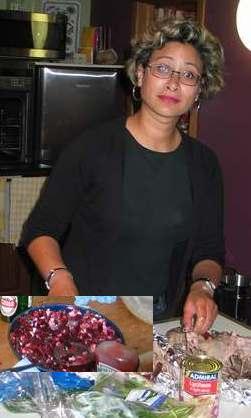
Mary's Beetroot and Feta Salad


In the wake of ever increasing requests for the finer details of the famous beetroot & feta salad that makes an appearance at every Pyrland Road party, herewith is reproduced the recipe: (c) & (tm) Mary Massina.

Buy either small beetroot or large bulbs (in UK, buy those little beauties pre-cooked in the bag - ed) - think its at least half of a large per person. Cut into quarters, don't peel, and oven roast at 180 until soft but not mushy - could take at least 30 - 45 minutes.

Cool and then, wearing gloves, peel - the skin should come away when rubbed.

Cut into small bits into a bowl.

Then add finely diced red onion and oven roasted capiscum - which you can buy in a deli but if not I tell you how do it later!

Mix up a dressing of balsmic vinger and olive oil and 1/2 of sugar.

Mix through and let stand - the longer the better

Then crumble feta on top and when ready to serve mix through - carefully! and don't forget to add another lot of feta on top for looks!

Oven roasted caps - put a whole capiscum into the oven and cook, probably at the same time as the beetroot until the skin starts turning brown - take out and put in a plastic bag to sweat - that way the skin is easy to peel. Or buy a jar of them at your local Turkish shop - ed

Peel and discard the seeds and the "pith" cut into strips.

You can also do this over the gas - buy turning the capiscum once the skin is charred. and then peel as above.

Don't forget if you have any left over caps cover them in olive oil - that way they keep for ever!!!

HBTM


Twas my birthday on Saturday. Obviously, we had a BBQ. Katie organised it par excellence.

Kicked off @ 2pm, ended about 5.30am. It rained, we bought a gazebo, (£12.99, Argos) Champion!

There's some photos from my camera here.

Simon's got some (beautiful resolution, gotta change to SmugMug) more here.

Friday, March 24, 2006

The London Drinker 2006

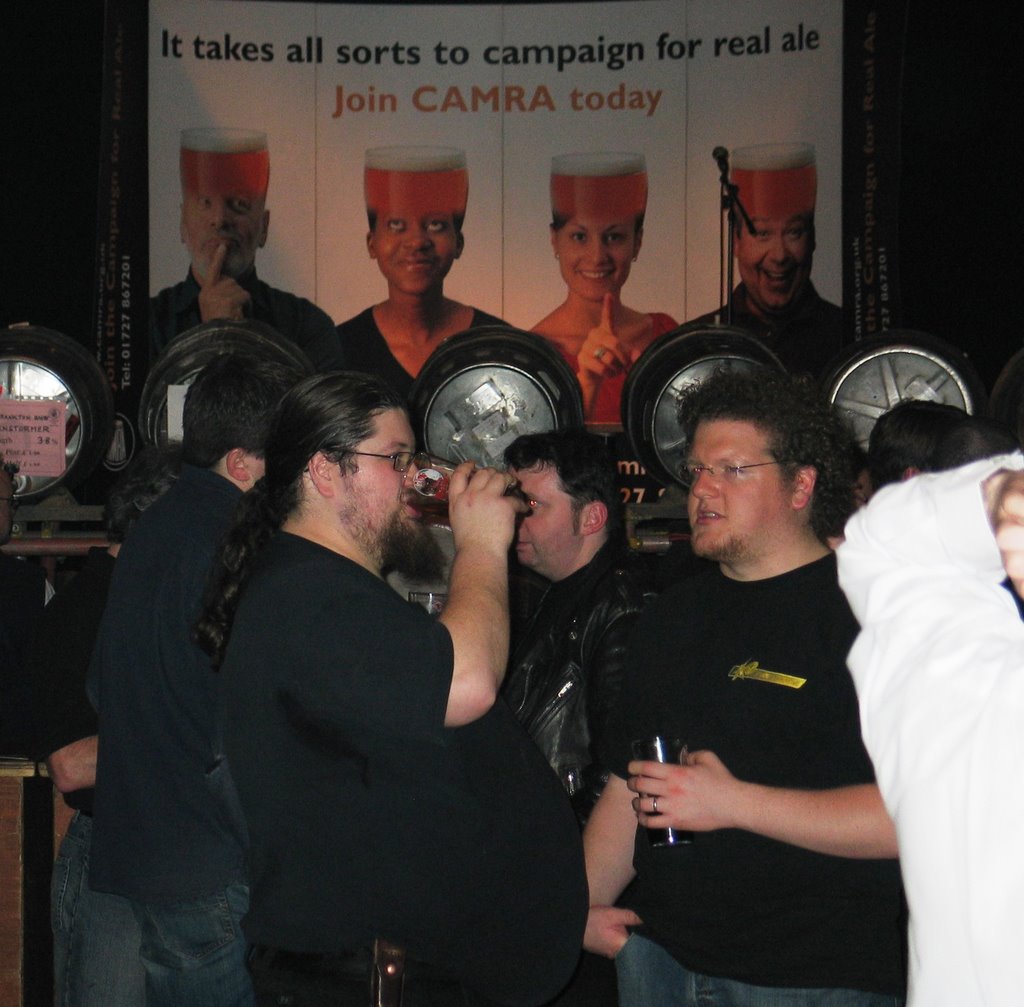
Summer must be on the way, 'cos it's beer festival season again. A bunch of us went to CAMRA's London Drinker Beer and Cider festival at St Pancras Town Hall last night. The place was rammed and sweaty. A couple of firsts and lasts. Firsts- Nick and Sarah have now been broken into the fine world of real ale, and I'm sure will go out and preach the gospel to the good people of Tasmania. Lasts-Simon and Holly are buggering off real soon, and last night was more than likely their swansong CAMRA event before heading back to the land of Toohey's New, Swan Gold and ummm golden beaches :(. Weirdest beer of the night must go to the foreign beer that Nick chose (and John wound up drinking) that had a nose of kippers and bacon. Dunno the name of it, but will try and find out. Bizarre.

Apologies for the break in firebombing

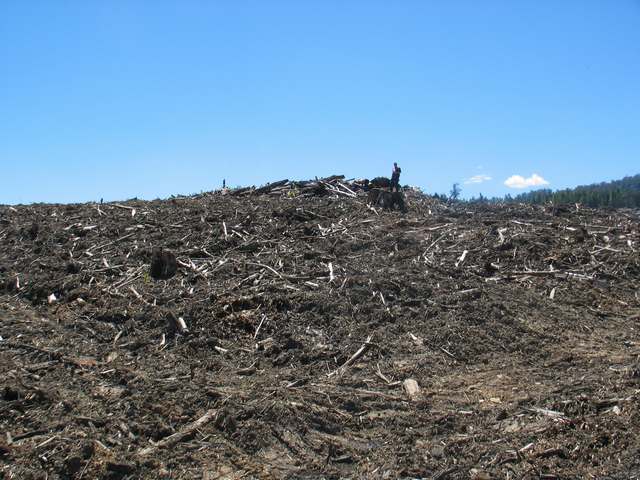
"They're only small trees that have no value as sawlogs"

Well, there's been basically no change in Tasmania's political makeup after last weekend's election. Lennon's "Labor" government was returned to majority power, the greens have probably lost one (and major party status), and the pisspoor libs may take the Education Minister, Paula Wriedt's seat.

And, apparently, the Monday after election day, Forestry Tasmania declared that the soil dryness index or some other such nonsense measurement was "perfect", and therefore firebombing of devestated logging coupes could continue unabated. Nothing to do with keeping the skies clear and the smoke out of voters' lungs during the campaign.

Well, Tasmanians, you voted for it overwhelmingly I guess. That's democracy.

Here's a report, and video footage of a current burnoff operation from the Wilderness Society's Geoff Law.

Monday, March 13, 2006

Weekend in Brugges

Katie and I took the Eurostar to Belgium last Friday. Two hours from London Waterloo to Brussels Midi, then an hour on by local train to Brugge. Train is certainly the way to go, especially when it ain't run by Richard Branson.

Brugge is a beautiful city, protected by UNESCO listing. Main industry seems to be tourism, followed very closely by CHOCOLATE and then by BREWING. Say no more.

Friday, March 10, 2006

Ve recover ze Porsche

Lenz and Steveo came over from Germany last weekend to pick up Lenz' latest project, a Chervil 356 replica. There's some pix of various aspects of the operation here. Would have liked a photo of the boys driving wrong way down a bus only street in Hackney though!

Thursday, February 23, 2006

Saint Nick on Satan Howard and his new film.

Looking like some kind of wild hombre himself, Nick Cave is interviewed in this week's Time Out London, on his new Cowboy ("There's no gay sex in our western") film, "The Proposition". In it, he laments the direction his native Australia has taken under the Howard regime, and how he feels the movie is quite apt for the time.

Click on the image, and you should be able to get it to full (readable) size by clicking again in the new window. If you can't, mail me and I'll send you the jpeg.
"The Proposition" is headlining the London Australian Film Festival, at The Barbican in March.

Monday, February 13, 2006

Generation eXpat: Beyond the cultural cringe

A comrade of mine, Ryan Heath, has written a book about the generation of young Australians who live overseas – why they leave and why they really hope to come back and what it means for Australia if they don’t. There's a launch here in London on March 9th. Here's a bit of an extract:

"More than 250 million people in India are aged 18-35. Imagine if 25 million of them - 97% of them professionals - decided to move overseas and spend their most productive years in England. What would happen to India? If that seems far-fetched, then imagine if you woke up tomorrow and Australia had an unemployment rate of 12 per cent or 15 per cent, instead of 5 per cent.

Why? Because the equivalent is happening in Australia right now. As you read this, ten per cent of our 18-35 year olds live overseas. Almost all of them are highly skilled, and only some of them plan to return. It’s not a cultural cringe – we know Australia can be great when it tries. The problem is it doesn’t try that often anymore.

But instead of working hard to lure talented Australians back to their home – our institutions actively push them away. The week before Christmas I received a letter saying that I had 14 days to re-register with the Electoral Commission or be thrown off the voting roll. No email, no phone call (why did I provide these details in the first place?) and given the Christmas mail surge, no chance that the letter would make the stated deadline.

Like thousands of other young Australians, I love Australia but I can’t even vote. Now I’m just a number: one of 1.2 million members of Generation eXpat..............."

Read the rest of the extract, and check out how to buy Ryan's book here.

Wednesday, February 08, 2006

The humble Blunnie


Fashionably unfashionableAndrew Anthony
Friday February 3, 2006

Guardian

There was a time, not so many years ago, when just about everyone - skinheads, postmen and right-on professionals - wore Dr Martens shoes and boots. They were the bold footprint of a new democratic age: practical, classless and, though they were designed by a couple of Bavarian physicians, quintessentially British.

Then something terrible happened. They became fashionable. Which is to say, they became self-conscious, ironic, jokey. Before he became an expert on TV shows about the 70s, the designer Wayne Hemingway began doing groovy things with Dr Martens for Red or Dead. Style diversification became the norm, and very soon the boots lost their distinctive identity. Now you can find 78 types of Dr Martens on the company's website, and none of them looks like required wearing. Not even my postman wears Docs these days.

However, there is a boot that remains true to itself, functional, simple and a thing of understated beauty. Step forward the Blundstone, which, as the company likes to say, is Australian for boots.

Aside from Errol Flynn and the devil marsupial, Tasmania has not given the world much to celebrate. But if for nothing else, it deserves global approbation for the Blundstone boot. Its style is as imperishable as its material is indestructible. I've had a pair that I've worn most days for about seven years and they show no sign of wearing. Indeed, I've noticed that if I leave them to their own devices, they seem to clean themselves. What more could a man want?

Blundstone has not been immune to the pressure of diversification, yet, while it has developed a number of ranges, it has managed to retain its classic appeal. All the same, Blundstone wearers should be wary of the company's boast that the boot is "as likely to appear on Parisian catwalks as it is in the mines of Pilbarra". Fashion: it really is the pits.

Wednesday, February 01, 2006

Save Recherche Bay


Recherche Bay is about as far south as you can drive in Tasmania. We camped for years at Cockle Creek, quite close to there. It is the site of the landing of a French expedition which pre-dates the British landing there by almost ten years. As seems with most of the beautiful areas in Tasmania, it is under threat by the woodchippers. There's a special feature in this month's Leatherwood Online. There's some beautiful pictures by Bob Brown here , and here's a timeline of the battle that's currently raging.

Thursday, January 26, 2006

Enganese

Check out this fine piece of literature, as produced by Japan Airlines' Marketing Department (it was handed to Ivan during his flight to the UK)

Wednesday, January 25, 2006

New Minister for Bulldozers and Clearfelling

New Federal Forestry Minister Eric Abetz came out fighting yesterday after being handed responsibility for Tasmania's most controversial issues.

Given the junior Ministry of Fisheries, Forestry and Conservation, Senator Abetz wasted no time infiring the opening shots against fellow Tasmanian Senator Bob Brown and his Green party.

Full story here......

I do also tend to agree with Duncan Kerr's sentiments:
"..........
The news that Hon Sen Eric Abetz is to become the minister for Fisheries Forestry and Conservation will be greeted with shaking heads in Tasmania and on the mainland

The only thing that keeps the appointment in perspective is that previous holders of that office have included Wilson Tuckey and the forgettable sacked minister who was Senator Abetz’s immediate predecessor.

It seems this is a position the Prime Minister reserves for the odd balls and those going nowhere........."