Monday, May 22, 2006
The Goode Knights of Battle.


Anne, John, Hanesey, Hannah, Katie and Scott all took the A-Team van (consumption= 4km/litre!) down to Battle, East Sussex for a bit of medieval recreation action. In the grounds of Battle Abbey (site of a bit of an altercation in 1066), we witnessed the third round of the 2006 Knights' Tournament, a day's competition between teams from the South, East, West and North of Merrie England in such time honoured sports as jousting, Falconry, and beating the shit out of each other with axes whilst dressed in full armour. It was great fun, though the West won unfortunately. My favourite horse was Hawthorn, and Katie's favourite knight was the bloke in black armour.
We camped at a great site just out of Battle town called Brake's Coppice. Fantastic catering was provided by Team Holliday, and entertaining lectures on the theraputic benefits of footcream were provided by Hanesey.
On the way back on Sunday we stopped in Rye for a pub lunch, which is a beautiful little harbour town with pebble-cobbled streets and really old pubs. Harvey's Best bitter was the main poison of the trip. All in all, an outstanding little jaunt. I think I'm gonna join a medieval recreation society. Don't tell Katie. There's a whole album of pics right here.


Tuesday, May 16, 2006
The Rodent and The Revolutionary

Hmmm.. A couple of interesting stories regarding two heads of state (sorry, Howard's NOT the head of state, is he?) currently on tour....
Washington: PRIME Minister John Howard has urged the United States to become more involved in international affairs, saying it is the only way to ensure world peace.....
Chavez: Imprison "Genocidal" Bush By Hannah K. Strange, May 15, 2006
LONDON -- Venezuelan President Hugo Chavez, the flamboyant foe of the U.S. administration, speaking during a two-day visit to London, denounced U.S. President George W. Bush as an "assassin" who should be imprisoned for his "genocidal" policies in Iraq.
Wednesday, May 10, 2006
Bud faces tough taste test in World Cup Germany
 By Louis Charbonneau
BERLIN (Reuters) - Budweiser may be the "King of Beers" in the United States, but it's often laughed at in Germany, where it will be one of only two beers available in football stadiums during the World Cup.
An official sponsor of the month-long soccer tournament that kicks off on June 9, Budweiser parent Anheuser-Busch originally won the rights to a monopoly on beer sales at the 64 World Cup matches to be held in 12 German cities.
But the decision outraged Germany's fiercely proud beer drinkers, many of whom dislike the taste of weaker U.S. beers. The German television station n-tv summed up the country's reaction on its Web site: "A cry went out across the nation."
The St. Louis, Missouri-based firm took note of the furor and relented. It agreed to give 30 percent of beer sales rights to the family-run German brewery Bitburger to sell its popular Bitburger Pils, better known as "Bit."
"We obviously read the stories and are aware of the media ... the German fan, the German consumer, has great pride in the local beers," Anheuser-Busch Vice-President Tony Ponturo told Reuters in a telephone interview.........
Read the rest of the story here.
Here's a link to a German student's anti-Bud protest site.
Tuesday, May 09, 2006
Tasmanian Scrumpy...wassitlike?

I've just come across South Country Cyder's page. They're making real Westcountry style Scrumpy down there on the Apple Isle. About time too. Has anybody tried it? They have a stall down at Salamanca. If you buy it direct from the farm gate over here, it's usually no more than a quid a litre. Strength varies, but it usually starts about seven percent, and the sky's the limit. Give it a go, and reviews right here please.....
Blots on The Landscape....


Steve has just launched blotonthelandscape.org where he is mapping the density of mobile phone masts versus that of alternative energy generators (wind turbines & solar installations, etc), and arguing that the two may as well be combined.
" I look out from the 8th floor, casting my eye across the skyline. It teems with mobile masts, a massacre of meccano abusing so many rooftops and I wonder why so few wind turbines are visible, when to my simple mind, it would be logical to erect turbines' [wind or photovoltaic cells] at the same time......."
He really needs people to get involved with this project. How? Simple. Take photos of any mobile masts and/or alternative energy generators (anywhere in the world), upload the photos and mark the location on the website's map using Steve's xml files. If you've got any problems, drop him a line to mail@blotonthelandscape.org
Hamburg for Lenz' Birthday
We jetted off to sunny Hamburg last weekend (it WAS sunny, around 25 celsius!) for the fortieth birthday of the old Seadog/GT40 adventurer himself, Captain Lenz. On Friday afternoon/evening, we had a BBQ on the beach opposite the container terminals. It was Hamburg Harbour Festival weekend, and we got there just intime for the opening parade to pass us by. Obviously, the whole night degenerated into a degree of debauchery on the Reeperbahn. On Saturday, after rising at four (PM that is), we headed off to a raucous Italian restauarant for the second instalment, for which we were joined by all of the birthday boy's siblings and various signifcant others. This was followed by a few more drinks in the student area until the wee small hours.
Sunday, a bit of a late breakfast was had, before we farwelled the Bavarian contingent. Then Katie and I headed down to the harbour to check out the festivities on the harbourside.
We flew German Wings, which was a nice relief, as they go direct to Hamburg Airport, and not to Ryanair's version (which is 150km out of town).
Here's some photos of the BBQ, and there's another album of the Harbour Festival here.
Sunday, a bit of a late breakfast was had, before we farwelled the Bavarian contingent. Then Katie and I headed down to the harbour to check out the festivities on the harbourside.
We flew German Wings, which was a nice relief, as they go direct to Hamburg Airport, and not to Ryanair's version (which is 150km out of town).
Here's some photos of the BBQ, and there's another album of the Harbour Festival here.
Tuesday, May 02, 2006

Wednesday, April 19, 2006
Tuesday, April 18, 2006
Recollections of a Foreign Minister
 Reproduced from Crikey!
 by Alexander Downer (11 April 2006, to the Cole Inquiry*)
It could have been It may have been I don't specifically recall I can't precisely remember I don't recall I don't recall I couldn't rule out It is possible I don't know I'm not sure I have only a very distant recollection I don't recall I don't think I did I'm pretty sure I didn't make a note I don't recall I could have done I don't recall it I don't recall I simply do not recall
I would have made a note of it and been quite focused I might have turned out to be wrong I don't recall I don't recall I don't recall I don't recall I wouldn't use that language I don't remember precisely It didn't mean anything to me It doesn't mean anything to me I wouldn't recognise him Nothing at all I don't read the summaries unless I'm stuck on a plane I have no idea I have no idea I can't recall I gave no such direction I don't recall I didn't make any notes I just don't recall I can't answer that question I can't recall my state of mind
I don't recall I simply do not recall I do not recall I can't quite find the place I don't recall I simply do not recall I don't recall I don't recall I don't recall I'd have to reflect on that
I don't recall I don't recall I'm not sure I don't know I don't recall It is sketchy very sketchy I can't tell you I wasn't aware There is so much intelligence It's a very major challenge to deal with intelligence I have no recollection of it I just can't recall it at all I have no recollection I have no recollection Information flows appear to be very imperfect I was not aware
I don't know I don't know I can't recall I'm not aware I can't recall I don't know I don't recall I assumed I don't recall We had no knowledge I can't specifically recall I can't recall
I just can't specifically recall It's very difficult to recall I'm not sure that I'm not sure I wasn't sure I can't specifically recall I don't recall I don't know I can't say I just don't know
I don't have any specific recollection I'm not aware I wasn't aware I had no knowledge I wasn't aware I wasn't aware I wasn't aware I just can't recall.
* Quotes compiled by Hal Judge and listed in the order in which they were uttered.
A day at the (dog) races

Katie, Lorraine and Scott recently had a day in the baking sunshine of Walthamstow, at the dog racing stadium. Seems we collectively came out in front. Missed out on a visit to the Charlie Chan nightclub beneath the stadium Shame. Not.
There's some pix of our canine adventures here.
Sunday, April 16, 2006
The ignorance of Mr Howard

The Guardian's editorial has a bit of a go at The Rodent, his government and their "grubby" behaviour in relation to the AWB scandal.
The ignorance of Mr Howard
Leader
Saturday April 15, 2006
Guardian
There was no more steadfast ally of George Bush and Tony Blair in the invasion of Iraq than John Howard, the prime minister of Australia. Mr Blair, in particular, was full of praise for his "strength and leadership" and his willingness to "get stuck in". Just a month before the war began, the foreign secretary, Jack Straw, informed Mr Howard that Britain was "in exactly the same position as the Australian government in respect to Iraq".Not quite, we hope. Mr Howard has now become the first Australian prime minister in 23 years to be called to account before a judicial commission after it emerged that a company exporting wheat to Iraq under the UN's oil-for-food programme had been paying huge kickbacks to Saddam Hussein's regime right up to the start of the invasion. It is by no means inconceivable that some of this money paid for weapons that were then used to fight Australian troops.
The company, AWB (formerly known as the Australian Wheat Board), has exclusive marketing rights for bulk wheat exports from Australia. It was Iraq's largest single supplier under the oil-for-food programme and also, it now emerges, Saddam's largest supplier of bribes - to the tune of £125m.
Although a series of 21 diplomatic cables dating back almost three years before the war had warned the Australian government that AWB was suspected of paying bribes, Mr Howard denies that he received or read any of them. Even though he made a speech just a week before the war accusing Saddam Hussein of cynically exploiting the oil-for-food programme in order to buy weapons, it apparently never occurred to him that AWB might be involved. "I always believed the best of that company," he told the judicial commission. Mr Howard's foreign minister and his trade minister have also succumbed to ignorance and/or amnesia as far as the warning cables are concerned. Foreign minister Alexander Downer told the commission that had "no specific recollection" of the crucial messages, and that he gets so many cables he tends not to read them all unless "I'm stuck on a plane and I've run out of reading material".
Not surprisingly, this is stretching the tolerance of voters and has caused a sharp dip for Mr Howard in the opinion polls. It may not bring down his government, but it does make his principled stand against Saddam's dictatorship look distinctly grubby and will do little for the morale of Australian troops still risking their lives in Iraq.
Thursday, April 13, 2006

Wednesday, April 12, 2006
Harry Plimpton on the spot

There were huge seas on the Derwent River in Hobart over the weekend. Having memories of my local beach losing all its sand in similar conditions when I was at infant school, I was quite interested in finding some pictures of what had gone down on Saturday. I very quickly became quite frustrated by the lack of pix on various news sites, and eventually gave up. Was speaking to my parents on Monday morning, and mentioned the storms. Dad replied "yeah, we were down there. I've got some photos, and had one published in the Sunday paper." I should have known in the first place.
Click here for a full size version. You'll see some more photos from Sandy Bay here.
Thanks to Becher & Raelene @ Beyond PR for the page scans.
Monday, April 10, 2006

In a novel light
 April 1, 2006
 Dugald Jellie takes a literary tour of
'PARDON the stench." It's Tom Gilling's introduction to a
Enough to make you squeal. So richly Dickensian, so ripe, this picture of the former whaling port, our second-oldest city, written up with such vital pungency it ensures I pack a handkerchief. Who knows what colonial odours linger, what's encountered when stepping back into the fiction of
For two days in
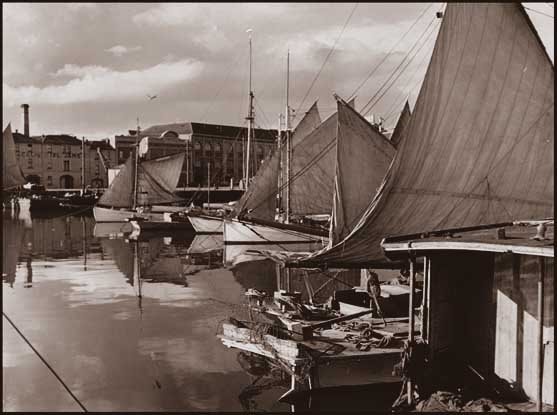
Henry Jones & Co was the firm, the famed IXL brand-name derived from Henry's quip: "I excel at the products I make". A household label in the British Empire during World War I, it was processed in the 1820s Georgian sandstone warehouses on the Old Wharf, wherefrom the city's earliest immigrants arrived, tea was imported from China, spices from India, nails from England, and jams, jellies and canned fruit dispatched to the world.
Near Victoria Dock is the Tasmanian Museum and Art Gallery, with an important John Glover collection and an affecting installation on the Tasmania tiger - the subject of Julia Leigh's taut debut novel, The Hunter.
A TV monitor within a chicken-wire cage screens the only known moving footage of the thylacine, the last known of which died in Hobart Zoo on September 7, 1936. Grainy film shows a distressed animal in a woefully small run. It's saddening how poorly the welfare of this species was regarded. Our largest native predatory marsupial, driven to extinction and now reduced to the State's coat-of-arms, used on official government merchandising, or to sell beer.
Patrick White's fictional characters Austin and Ellen Roxburgh arrived in
Soft rain falls as I leave the gallery. A scrim of mist blurs
Fullers in
It's a fine bookshop, with the upstairs Afterword Cafe serving delicious snacks. But Astrolabe Booksellers at
Proprietor Michael Sprod points me to the 1846 Shipwright's Arms Hotel in nearby Battery Point, for which I am grateful. It's dinnertime and the bangers'n'mash are just the ticket, washed down with a Cascade (they've five on tap: lager, light, pale ale, draught and stout). A rainbow spans the Derwent in saffron light. Oh, my goodness,
Next morning I'm on the first bus to Fern Tree and stride up
My view from the top is reliant entirely on memory of Glover's 1831 oil-on-canvas landscape, The Derwent River and
There's no time to call at the Female Factory near the Cascade Brewery in
I return afterward to the deep-water wharf on the "neat flat river", as poet Vivian Smith wrote, for a seafood lunch at Mures, a local favourite. Seagulls quarrel outside among trawlers and spiralled tea-tree craypots. Blue eye and farmed Atlantic salmon are on the menu. I order pink ling.
Much of the afternoon is spent following Richard Flanagan's Gould's Book of Fish, inspired by William Gould's circa 1832 convict Sketchbook of Fishes in
Time's running out. The Theatre Royal is a must-see, opened in 1837 among tanneries, abattoirs, a soap factory; Australia's oldest, where Sir Laurence Olivier in 1948 acted in The School for Scandal and later reminisced: "The audiences were warm and wonderful and the ovations staggering." The building was thankfully saved from demolition in the early 1950s by, among others, Hal Porter. It remains a 750-seat monument to high Victorian make-believe.
From
The barman shouts me a beer and tells a story. He says he's in Flanagan's Gould's Book of Fish as a character, that the author lives nearby and drinks here often. Certainly the pub's in the novel, where Sid Hammer loses his mystical book after leaving it on the bar.
Soon after I meet a river guide who once took me down the
Wednesday, April 05, 2006
The chilli so hot you need gloves
 The Times, April 1 2006
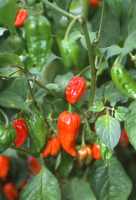
THE world’s hottest chilli pepper does not come from a tropical hot spot where the locals are impervious to its fiery heat but a smallholding in deepest Dorset.
Some chillis are fierce enough to make your eyes water. Anyone foolhardy enough to eat a whole Dorset Naga would almost certainly require hospital treatment.
The pepper, almost twice as hot as the previous record- holder, was grown by Joy and Michael Michaud in a poly- tunnel at their market garden. The couple run a business called Peppers by Post and spent four years developing the Dorset Naga.
They knew the 2cm-long specimens were hot because they had to wear gloves and remove the seeds outdoors when preparing them for drying, but had no idea they had grown a record-breaker.
Some customers complained the peppers were so fiery that even half a small one would make a curry too hot to eat. Others loved them and the Michauds sold a quarter of a million Dorset Nagas last year. At the end of last season Mrs Michaud sent a sample to a laboratory in America out of curiosity. The owner had never tested anything like it.
According to Mrs Michaud, the hottest habañero peppers popular in chilli-eating competitions in the US generally measure about 100,000 units on the standard Scoville scale, named after its inventor, Wilbur Scoville, who developed it in 1912. At first the scale was a subjective taste test but it later developed into the measure of capsaicinoids present. The hottest chilli pepper in The Guinness Book of Records is a Red Savina habañero with a rating of 570,000 Scoville Heat Units (SHU).
Mrs Michaud was stunned when the Dorset Naga gave a reading of nearly 900,000SHU. A fresh sample was sent to a lab in New York used by the American Spice Trade Association and recorded a mouth-numbing 923,000SHUs.
Mrs Michaud said: “The man in the first lab was so excited — he’d never had one even half as hot as that. The second lab took a long time because they were checking it carefully as it was so outrageously high.”
The Dorset Naga was grown from a plant that originated in Bangladesh. The Michauds bought their original plant in an oriental store in Bournemouth. Mrs Michaud said: “We weren’t even selecting the peppers for hotness but for shape and flavour. There is an element of machismo in peppers that we aren’t really interested in. When the results of the heat tests came back I was gobsmacked.”
The couple are now seeking Plant Variety Protection from the Department for Environment, Food and Rural Affairs, which will mean that no one else can sell the seeds.
Mrs Michaud, 48, has run the company with her husband at West Bexington, near Dorchester, for ten years. Mr Michaud, 56, has been a regular on the television chef Hugh Fearnley-Whittingstall’s River Cottage series, advising on vegetable growing.
Anyone wanting to try the Dorset Naga will have to be patient as chillis are harvested only from July on. In Bangladesh the chillies grow in temperatures of well over 100F (38C) but in Dorset they thrive in polytunnels.
Aktar Miha, from the Indus Bangladeshi restaurant in Bournemouth, said that even in its home country the naga chilli was treated with respect. “It is used in some cooking, mainly with fish curries, but most people don’t cook with it. They hold it by the stalk and just touch their food with it,” he said.
“It has a refreshing smell and a very good taste but you don’t want too much of it. It is a killer chilli and you have to be careful and wash your hands and the cutting board. If you don’t know what you are doing it could blow your head off.”
FROM HOT TO NOT
Scoville Heat Units
Pure capsaicin: 15m to 16m
US Police-grade pepper spray: 5m
Dorset Naga: 923,000
Red Savina habanero: 577,000
Scotch bonnet: 100,000-325,000
Jamaican hot pepper: 100,000-200,000
Cayenne pepper: 30,000-50,000
Jalapeno pepper: 2,500-8,000
Tabasco sauce: 2,500
Pimento: 100 to 500
Bell pepper: 0
Tuesday, April 04, 2006
Katie got a new bike

Hey all,
Katie's picked up her new bike, compliments of the Rumble/Askins closing down sale. As well, we took a trip out to the Kew Bridge Steam Museum. There's photos, and a couple of other assorted snaps on my new SMUGMUG photo page (if you wanna join, quote my email address!) right here.
Thursday, March 30, 2006
Glastonbury, the movie

As some of you may be aware, The Glastonbury Festival has been a bit of a centrepiece of the last four summers I've had in the UK. Sadly (but understandably), there's no activity in the Vale of Avalon this year (which begs the question, where will the Scrumpy bus guy get rid of his excess production)?
Micahel Eavis commissioned JulienTemple to produce a film about the festival in 2002, the first year of "superfence". Eavis was worried that the fence could destroy the unique atmosphere of Glastonbury, making it the last year. He was wrong, Glastonbury has survived, and the film is about to be released in Britain.
Here's a preview of the film from The Observer.
Wednesday, March 29, 2006
Knowledge or humanity

British Museum trustees' decision to return human remains to Tasmania was harder than we expected
Helena KennedyTuesday March 28, 2006
Two bundles held by the British Museum, made of kangaroo skin and closed by a drawstring, are unremarkable, but contain human ash gathered from a cremation fire by Tasmanian Aboriginals in about 1830. They are extremely rare physical traces of a population nearly exterminated during European settlement in the 19th century. This genocide, in which the indigenous people were shot for sport by farmers, was one of the most shameful episodes in British colonial history. The last full-blood Tasmanian Aboriginal died in 1888, but the original population continues to exist in the form of Tasmanians of mixed Aboriginal and European descent. And it is their representative body, the Tasmanian Aboriginal Centre, that has asked for the return of their ancestors' ashes.
The law prohibits trustees from disposing of any part of the museum's collection - a sensible measure to protect against short-term financial or political pressures. But it has long been obvious that human remains are not like other objects held by museums. Descendants are distressed that the remains of ancestors have not reached their final resting place, in accordance with indigenous customs. And when, as in the case of the Tasmanian Aboriginals, those ancestors suffered such an egregious wrong, that distress is likely to be very intense.
Last year parliament passed a law recognising the unique status of human remains in museum collections, and enabling trustees to transfer ownership when appropriate. British Museum trustees welcomed this change; indeed, we helped draft a code of practice to accompany the law. Now the trustees could return human remains where the burial process had been interrupted, which includes the ashes in the bundles. But should they? That question proved more complicated than we expected.
The bundles were filled with the cremated ashes of a family member, then carried close to the body as amulets to protect against illness or alleviate physical pain. There is no way of knowing what would ultimately have happened to these two bundles had they not been collected by an outsider as records of structures of belief and religious practice among the native Tasmanians; it seems likely that they would have been laid to rest in a particular place in the landscape, perhaps in a tree or somewhere in the bush.
But - and it is a big but - these are now the only two such bundles known anywhere in the world. That means they are the only surviving physical evidence of a whole system of belief and a social order that has since disappeared: precisely the kind of object the British Museum was established to keep and preserve. In our present state of knowledge the ashes can reveal no further useful information about the health or physical history of the people when alive; but who knows what knowledge might one day be derived from them? As trustees, we had to consider if we could responsibly allow the loss of what might be the last possible information about Tasmanian Aboriginals.
The debate was difficult. How do you weigh a possible advance in human understanding against the desire of a community of people to see the return of the ashes of recent forebears so they can be disposed of with appropriate ritual? Which course of action will lead to greatest public benefit? Might a later generation of Aboriginal descendants deplore the loss of the already slender material evidence of Tasmanian customs? How will that loss look in a hundred years?
The trustees consulted three outside experts and the museum's own curators. There was much debate on fact and law. Eventually we unanimously decided that the ashes should be transferred to the Tasmanian Aboriginal Centre.
· Baroness Helena Kennedy QC is a human rights lawyer and British Museum trustee
Monday, March 27, 2006
Mary's Beetroot and Feta Salad
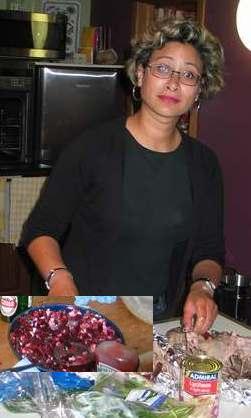
In the wake of ever increasing requests for the finer details of the famous beetroot & feta salad that makes an appearance at every Pyrland Road party, herewith is reproduced the recipe: (c) & (tm) Mary Massina.
Buy either small beetroot or large bulbs (in UK, buy those little beauties pre-cooked in the bag - ed) - think its at least half of a large per person. Cut into quarters, don't peel, and oven roast at 180 until soft but not mushy - could take at least 30 - 45 minutes.
Cool and then, wearing gloves, peel - the skin should come away when rubbed.
Cut into small bits into a bowl.
Then add finely diced red onion and oven roasted capiscum - which you can buy in a deli but if not I tell you how do it later!
Mix up a dressing of balsmic vinger and olive oil and 1/2 of sugar.
Mix through and let stand - the longer the better
Then crumble feta on top and when ready to serve mix through - carefully! and don't forget to add another lot of feta on top for looks!
Oven roasted caps - put a whole capiscum into the oven and cook, probably at the same time as the beetroot until the skin starts turning brown - take out and put in a plastic bag to sweat - that way the skin is easy to peel. Or buy a jar of them at your local Turkish shop - ed
Peel and discard the seeds and the "pith" cut into strips.
You can also do this over the gas - buy turning the capiscum once the skin is charred. and then peel as above.
Don't forget if you have any left over caps cover them in olive oil - that way they keep for ever!!!
Subscribe to:
Posts (Atom)

 Posts
Posts


